
August 2022
Pay database survey is live!

August 2022
In this month’s newsletter:
Who We Are
Announcements → Pay Database, Blog, Webinar, PAGES Book Club
Meet the Mentors → Kathryn Marguy
Resource of the Month → PIPPOST + Article
Monthly Musings → How do I counteract a competitive workplace culture?
Job Board → Double feature!
Pawfessional Advice
Who We Are
PIP is a free mentorship program that helps prepare early career applicants (those moving into or out of entry-level jobs) for the work of applying to, interviewing for, and navigating negotiations of new positions in scholarly publishing.
Check out our open inbox program, newsletter archive, blog, and book club. We’re always looking to collaborate and expand, if you have ideas get in contact with the admins by emailing pathsinpub@gmail.com
Announcements:
Pay Database
Our Pay Database survey is live! Fill it out anonymously by clicking here. Make sure to share it extensively in your networks so we can gather as much data as possible. You can submit multiple times if you’d like to input data for your past positions. We’re still hoping to have the database itself up and running by the end of the fall!
Blog
We’ve launched the PIPPOST Blog and are actively seeking guest posts for it. The first two posts (Who Publishes What? and How to Read a Publishing Job Ad) are up. If you have an article that may be relevant to our audience, please pitch it by emailing pathsinpub(at)gmail(dot)com with “PIPPOST” in the subject line. You are also welcome to just email us ideas and we will do our best to find authors.
A reminder: published articles always look great on your resume! Take the plunge with us. However, this is an unpaid writing gig. Sorry, we hope to be able to pay in the future!
Webinar
Join us (TOMORROW) for our first webinar with the AUP Professional Development committee: Resumes and Cover Letters: Tips from University Press Professionals, on August 3 at 11 a.m. ET. Register here for this exciting webinar with Angelica Lopez-Torres (University of Texas Press), Kathryn Marguy (LIbrary of Congress), Bethany Wasik (Cornell University Press), and moderator Lyndsey Rago Claro (Princeton University Press).
Our next collaborative webinar will be in September, on interviewing tips. Stay tuned for registration info!
PAGES Book Club
Our next PAGES Book Club meeting is set for Thursday, September 29 at noon ET. We plan to read Stylish Academic Writing, by Helen Sword (Harvard, 2012), and you can register here now! Harvard University Press will extend a 30% discount on the title and we hope to have that code shortly so, while you should definitely register now, hold off on getting the book until we know more.
Our first meeting was last Thursday, the 28th, and we want to thank everyone who came out. We had a great conversation and very much look forward to additional chances to chat! We will talk about the books (feel free to attend even if you haven’t read them, the discussion is guided), but we’ll also talk about more than the book: this is a space for community and connection. If you attended and have feedback for us, you can submit it anonymously here.
#TGIFAQ + #TERMTUESDAY
If you haven’t noticed already, we’re on Twitter and post content every Friday (TGIFAQ) and Tuesday (TERMTUESDAY). Please submit questions to our Open Inbox Program for TGIFAQ and always feel free to let us know if there’s a term you’d like to see by messaging us on Twitter.
Meet the Mentors

Kathryn Marguy ventured into publishing on the acquisitions side of things at the University Press of Florida, and eventually at Johns Hopkins University Press before hopping over to the dark side: marketing and publicity. She has first-hand experience honing that seemingly-elusive acquisitions/marketing relationship and navigating the path toward growth and promotion in the university press world. After nearly a decade in publishing, she now serves in a public affairs capacity at the Library of Congress, where she still talks about books daily. Having stood at both ends of the hiring process, Kathryn loves talking through resume and cover letter edits to make a meaningful first impression with potential employers. She often tweets about publishing @pubkat.
Ask Kathryn a question through our Open Inbox program!
This August we have a double feature.
First is this article by Andrew Hnatow on Derek Krissoff’s blog, about leaving university press publishing. Hnatow, a former university press EA, left us thinking about the reasons someone might leave publishing, especially at the entry level, and it’s interesting for us all to consider, regardless of current position.
Second is our new blog, the PIPPOST. Our first two articles are up:
Who Publishes What? by Rachael Levay and Allegra Martschenko, goes through the different types of scholarly publishers and what types of books they produce.
How to Read a Publishing Job Ad by Robert Ramaswamy, offers some fantastic tips on pulling apart job ads.
Monthly Musings
Every month we highlight a question submitted to PIP and one of our mentor’s answers. This month we tackle a culture of competitive suffering.
Question: I'm having trouble with my work-life balance and often find myself working late at night to finish up tasks. How do I have a conversation with my manager about restructuring my workload? Everyone else at my level seems to work late too, but the senior level folk mainly just get to go home at the end of the workday. Is this just how it has to be? —Anonymous Ally
Dear Anonymous Ally,
Last month we talked about how to discuss workload with your supervisor. This month, I’d also like to address a few additional issues that I’m seeing implied by your phrasing. In particular, it’s the second-to-last sentence that implies a culture of competitive suffering among you and your colleagues, or it maybe demonstrates outdated and unhealthy attitudes that are trickling down from your managers.
I’m making an assumption that you and your colleagues are all in non-management and even assistant-level roles and aren’t feeling empowered to start to change this routine of working at the office late into the evenings. What I don’t see in your question is resentment toward managers who are enforcing a culture of working late, which is why I’m worried that you and your colleagues are somehow competing against one another to stay the latest and do the most! One of the unfortunate culture norms that publishing leaders need to urgently break down—and it’s a failure of leadership and mentorship if they haven’t already—is the pernicious and harmful hustle culture that has led to burnout through every job role in publishing and in so many other industries. Now, find somewhere safe and repeat after me as many times as it takes to feel it: I AM ENTITLED TO WORK-LIFE BALANCE.
If it’s the case that you’re not feeling pressured by your boss to stay late, I want you to ask yourself very seriously, why do I need to be at the office past 6 p.m. (or 5 p.m. or whatever your set hours are)? That may feel a little silly, but truly, ask yourself—is it because I see other colleagues here late and it makes me feel inadequate in some way? Is it because I feel like there’s just too much I should/could be doing and I’m having trouble letting go of a to-do list or letting something roll over to tomorrow or next week?
If you’re feeling inadequate, or that your colleagues would somehow punish you for leaving at a reasonable hour, ask yourself this next question: What is the absolute worst thing that would happen if I start leaving when the work day is over? Maybe you worry that your colleagues would, I dunno, call you out? Think you’re not good at your job? Think you’re a slacker? Who cares!? They’re not your boss. They don’t sign your paychecks or deliver your performance evaluations. So, just, go home when your workday is done, and hopefully you’ll inspire them to do the same. I want to point you to another relevant letter from Alison Green’s Ask a Manager blog.
Related, you should also ask your supervisor directly about your work product at your next performance evaluation (PE). If your PE is rating you at “Meets Expectations” or higher, then I want you to take it to heart! Don’t think of a phrase like “Meets Expectations” as a “meh” rating. It is an A+, 100%, perfect rating. You were hired to do a job, and you’re doing it exactly as you should, point blank, period. If your work is at expectations or beyond, don’t continue to overburden yourself by staying late unnecessarily.
Here’s the thing about being a great manager, leader, or mentor—you need to both model and make your expectations clear, and you check in and follow through to reinforce expectations and to create space for employees to ask questions, adjust, and grow. I am very, very fortunate to have several current and former mentors and managers who have been very good about this, but I know there are leaders who might not be so open or encouraging, or good publishers who just never learned how to be a good mentor/manager. I wish I could tell you that you go through a magical transformation when you become a supervisor that gives you all the tools to be great at your daily work and great at being a leader, but unfortunately there isn’t. And there really isn’t any kind of on-boarding or training when you take on direct reports. In very rare cases there might be, but I have yet to hear of a publisher that offers a management training course that focuses on managing employee health, happiness, and well-being.
So, here’s a final thing I’m going to encourage you to do—learn about managing up. And these strategies are also where you’re going to get all kinds of great ideas about how to have difficult conversations with your boss, and also some great ideas and motivation for when you’re a manager one day. Managing up can be a tricky little thing, but it will make your work life much better and enable you to find a better relationship with your boss and a more comfortable work-life balance.
I’ll conclude by revealing the Big, Dirty Secret: you’re never going to get it all done. It’s quite literally impossible! Publishing, or really any media-world work is both great and terrible in the way that there’s always something more you could be doing. I hope you can take some time to sit and get comfortable with the fact that there’s only so much you can ever do. Nobody—and I’m shouting this to other colleague and leaders in publishing—should be devaluing your time or your work-life balance.
Taking care of your employees, re-evaluating their roles, and ensuring an equitable and reasonable work burden only makes your office and the business better. Balance, satisfaction, and respect lead to a happier workplace, better outcomes, and plenty of successes. I hope that not only you, but your fellow colleagues working late, will get to a place where you can feel content and pride in your work, even when you leave at a reasonable hour.
Best,
PIP Mentors
Take a gander at this Subsidiary Rights Assistant position at Columbia! This would be a great starting point for someone entering the field or someone interested in rights licensing! Pay: 43.1k-45k
But wait, there’s another! Yale has an open humanities editor position that would be perfect for any current EAs or Assistant Editors. This could be the next step up in your career, try it out! Pay: 40k-80k
PAWFESSIONAL ADVICE OF THE MEOWNTH
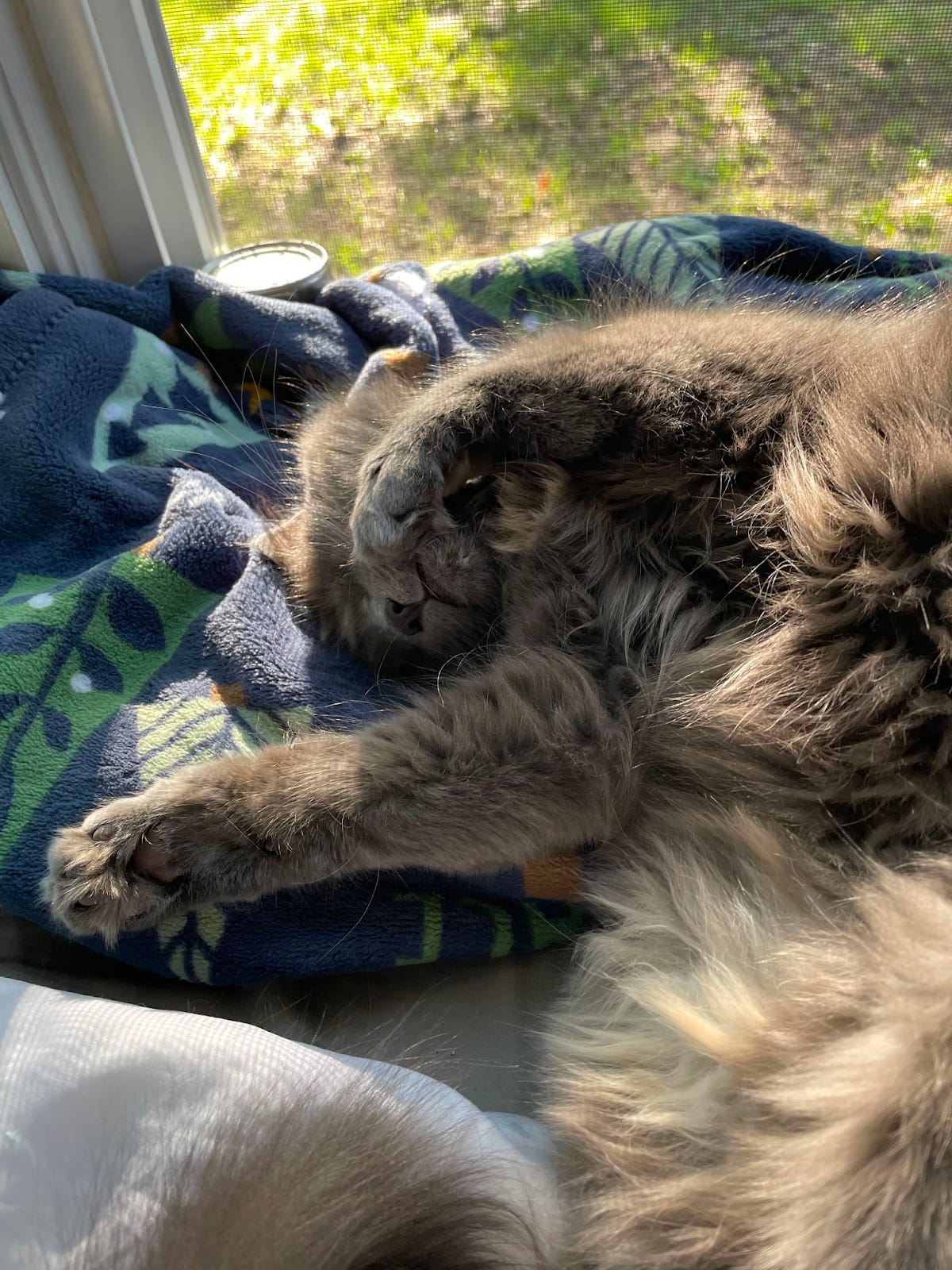
Everyone needs to take a paws sometimes, especially at work. Use that PTO—it's yours!
—Pawgram Coordinator Marlowe